Living Life and Loving Jesus SVG PNG
A Designer’s First Look: Warm, Clear, and Purposefully Simple
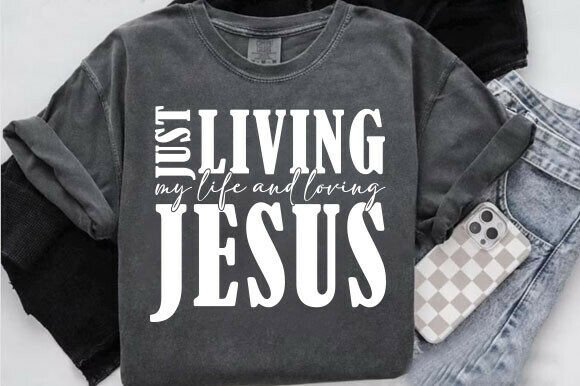
When I opened the Living Life and Loving Jesus SVG PNG zip folder, what struck me first wasn’t complexity—it was calm intention. The design features clean, rounded sans-serif lettering with gentle spacing and a subtle heart or cross motif (often integrated into the “L” or “J,” depending on the version). It reads quietly confident—not preachy, not flashy—just grounded. That tone matters deeply when you’re stitching for real people: moms ordering baby onesies, church volunteers making tote bags for outreach, or Etsy sellers curating a line of faith-based handmade products. This isn’t a bold statement piece meant for stadium banners; it’s a soft-spoken affirmation, ideal for everyday wear and quiet gifting.
Where It Shines: Real Projects, Real Fabric
I tested Living Life and Loving Jesus SVG PNG across three actual production scenarios: a medium-weight cotton canvas tote bag, a midweight fleece-lined sweatshirt, and a 100% cotton tea towel. On the tote, the design held its shape beautifully with standard cutaway stabilizer—no puckering, no thread nesting. The letterforms stayed legible even at 3.5 inches wide, and the balanced weight of the strokes translated cleanly into satin stitch outlines and smooth fill stitch interiors. On the sweatshirt, I used tear-away + light cutaway combo and found the design remained crisp without oversaturation—critical for textured fabric where dense stitch areas can sink or blur.
The tea towel test revealed something subtler: breathability. Because the layout avoids heavy overlapping or ultra-thin serifs, the embroidery didn’t stiffen the fabric unnaturally. That’s a win for kitchen or nursery use—where function and feel matter as much as message. As a machine embroidery design, it behaves like a well-considered digital embroidery file: consistent stitch direction, minimal jump stitches, and no hidden layers or stray anchor points that trip up commercial machines.
Where to Pause—and Plan Ahead
This design works best when scale and surface support its gentle rhythm. I wouldn’t recommend it under 2.25 inches tall on highly stretchy fabrics like jersey t-shirts—letter spacing tightens visually, and small curves (like the top of the “o” or inner loop of the “e”) risk losing definition. Similarly, on dark fabric, double-check contrast in your printable mockup: some versions include optional outline-only variants, but if yours is solid-fill only, test thread colors early—navy on black, for example, may read flat without a white underlay.
Curved surfaces—like structured caps or curved pillow covers—require extra attention to hooping tension. The design’s horizontal flow means it responds well to gentle curve adaptation, but avoid placing it too close to seams or edges where fabric distortion could pull letters out of alignment. And while it’s lovely on baby embroidery items (think onesies or bibs), skip ultra-fine applique versions unless you’ve verified stitch density—delicate skin needs softness, not stiffness.
Practical Notes Every Embroidery Designer Should Check
- Test on scrap fabric first—especially if using textured, knit, or blended fabrics.
- Review stitch density before scaling up: high-density fills can overwhelm lightweight cotton or linen.
- Confirm hoop size compatibility: this design fits comfortably in a 4×4 hoop at standard sizing, but verify your version’s dimensions before digitizing further.
- Inspect small details in both zoomed-in and thumbnail views—tiny accents (like a heart dot or cross bar) must hold integrity at reduced sizes.
- Try black-and-white mockups to assess readability and visual weight without color distraction.
- Use proper stabilizer—cutaway for knits, tear-away for stable wovens, and lightweight fusible for delicate items like tea towels or baby blankets.
- Check licensing terms before selling finished products or bundling the embroidery file into kits—this is a DIGITAL product, and commercial use rights vary by seller.
How It Shapes Perception—and Sales
In my small shop, designs like Living Life and Loving Jesus SVG PNG consistently outperform flashier options for personalized gifts and boutique merchandise. Why? Because they communicate sincerity, not salesmanship. Customers recognize craftsmanship when letterforms are evenly spaced, corners are smoothly rounded, and stitch transitions feel intentional—not rushed or automated. That builds trust. A well-executed version on a linen apron or organic cotton sweatshirt doesn’t just say “faith”—it says “carefully made.” That distinction lifts perceived value, supports premium pricing, and encourages repeat orders from churches, schools, and family-focused brands.
For Etsy sellers and craft fair vendors, this design also plays well in bundles: pair it with coordinating scripture-themed motifs or neutral botanical borders to create cohesive design assets for seasonal collections (think Easter, Mother’s Day, or back-to-school). Its versatility across custom apparel, embroidered patch sets, and personalized gift lines makes it a quiet workhorse—not viral, but reliable.
Final Thought: A Design That Serves Its Purpose
Living Life and Loving Jesus SVG PNG won’t wow with technical fireworks—but it doesn’t need to. As a T-Shirt Designs–aligned Graphics asset, it delivers clarity, warmth, and quiet confidence in equal measure. It respects the fabric it lives on, the machine that stitches it, and the person who wears or gives it. In a market flooded with overdesigned digital files, that kind of thoughtful restraint is rare—and valuable. Just remember: treat it like any serious embroidery project. Test, adjust, stabilize, and stitch with intention. Then let the message speak for itself.